Tag: #DataNeuron

  • Breaking Down Multimodal Embeddings: How Machines Understand Mixed Data

    Breaking Down Multimodal Embeddings: How Machines Understand Mixed Data

    AI-integrated systems once thrived in silos: text models parsed documents, vision models recognized images, and models detected sounds. Yet people rarely process information in isolation. We read captions under pictures, watch videos with sound, and naturally link meaning across channels.

    Multimodal embeddings bring this human-like perception to AI, creating a unified approach to understanding and relating text and images. At DataNeuron, we’re evolving our Retrieval-Augmented Generation (RAG) framework from text-only to a truly multimodal experience, enabling more context-aware insights across diverse data types.

    From Single-Modality to Multimodal Intelligence

    Traditional machine learning pipelines were siloed by modality:

    • Natural Language Processing (NLP) for text
    • Computer Vision (CV) for images

    Each used its own features, architectures, and training data. That’s why a text embedding could not directly relate to an image feature. However, real-world tasks need cross-modal understanding. 

    A self-driving car combines camera feeds with sensor text logs. An e-commerce engine pairs product descriptions with photos. A customer support bot must interpret text, as well as screenshots or voice messages. Without a common representation, these systems can’t easily search, rank, or reason across mixed inputs.
    What Are Multimodal Embeddings?

    An embedding is simply a vector (a list of numbers) that encodes the meaning of data.

    • In text, embeddings map semantically similar words or sentences near each other in vector space.
    • In images, embeddings map visually similar content near each other.

    Multimodal embeddings go further… they map different modalities into a shared vector space. This means the caption “a red sports car” and an actual photo of a red sports car end up close together in that space.

    How Do Multimodal Embeddings Work?

    There are two main approaches, both relevant to DataNeuron’s roadmap.

    1. Convert Non-Text Modalities into Text First

    Here, each modality is preprocessed into text-like tokens:

    • Images → captions or alt-text via a vision model

    Once everything is in text, we can use a text embedding model (e.g., OpenAI, Cohere, or open-source models) to generate vectors. DataNeuron currently offers this method by default: you upload mixed data, our system normalizes it to text, and we build a unified vector store for retrieval.

    2. Direct Multimodal Embedding Models

    Alternatively, we can train or use models that natively embed text or images into the same space without converting them. DataNeuron is experimenting with this second route, where we integrate open-source and licensed (paid) embeddings to give our users both options.

    Why Multimodal Embeddings Matter for RAG

    Retrieval-Augmented Generation (RAG) traditionally enhances LLMs by retrieving text chunks relevant to a query. But enterprise data rarely lives as plain text. You may have:

    • PDFs with embedded images
    • Sensor logs with metadata

    By extending RAG into multimodal territory, DataNeuron enables users to:

    • Search across formats (“Find me slides, videos mentioning Product X”)
    • Contextualize outputs (“Generate a summary of this image plus its caption”)

    Reduce preprocessing overhead (no manual transcription or tagging needed)

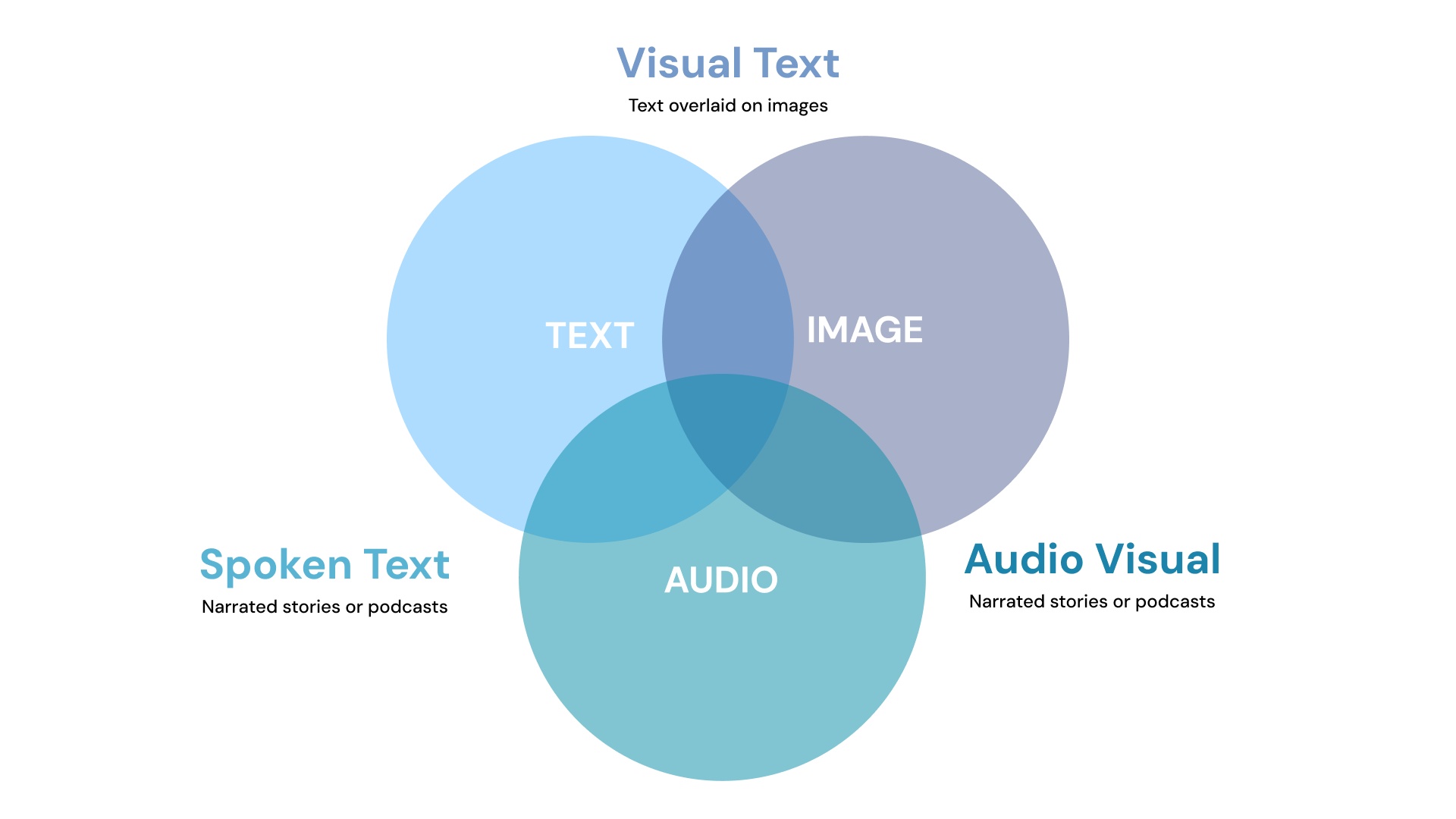
    Humans naturally combine multiple senses to understand context. Multimodal embeddings give machines a similar capability, mapping text, images, and sounds into a shared meaning space.  

    For DataNeuron, adding multimodal embeddings on top of our RAG stack means customers no longer need to flatten their data into text. Instead, they can bring their data as-is and still get unified, context-aware retrieval and generation.  This democratizes multimodal AI for enterprises that can’t afford to train such models themselves. We’re curating and integrating the best open and commercial models to give our users immediate and practical power. 
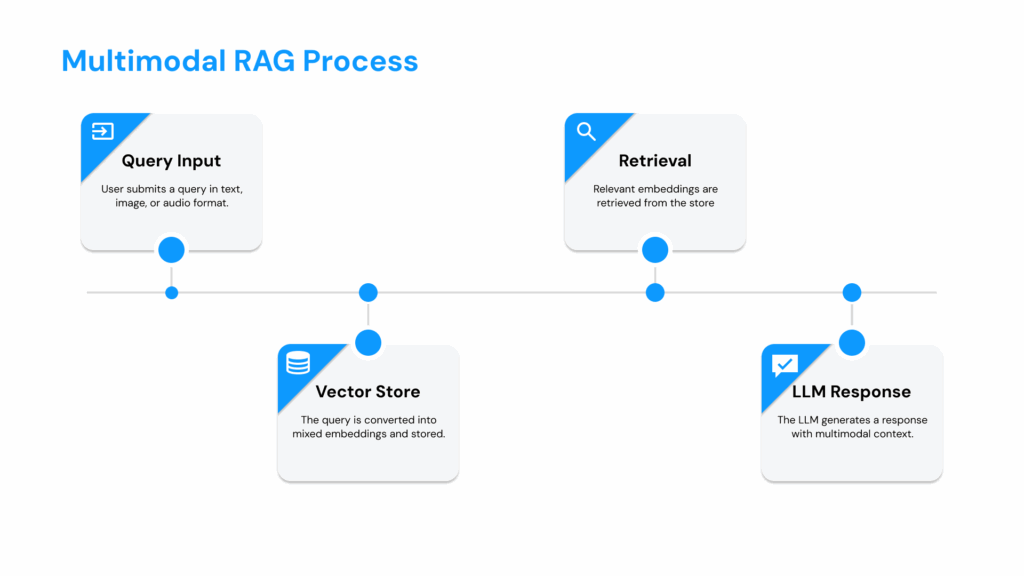
    Multimodal Retrieval-Augmented Generation (RAG) process diagram illustrating input query, vector store search, document retrieval, and LLM response generation.

    DataNeuron’s Multimodal Embedding Strategy

    We’ve structured our approach around three pillars:

    Unified User Experience

    Users can upload or stream text, images, or audio. Our system either converts non-text into text first or applies a multimodal embedding model directly. The resulting vectors live in a single store, so cross-modal queries “just work.”

    Choice of Embedding Models

    We support both open-source and paid/licensed embeddings. This lets customers start with free models for experimentation, then switch to higher-accuracy or enterprise-grade embeddings without rewriting pipelines. Some examples of embedding models supported by DataNeuron include open-source: CLIP, AudioCLIP, OpenCLIP; paid APIs: commercial text + image embeddings from major providers.

    Future-Ready Architecture

    Our vector store and RAG engine are designed to handle not only text, image, and audio today, but also include richer modalities like video and sensor data tomorrow. We’re treating “embedding as a service” as a core building block of DataNeuron.
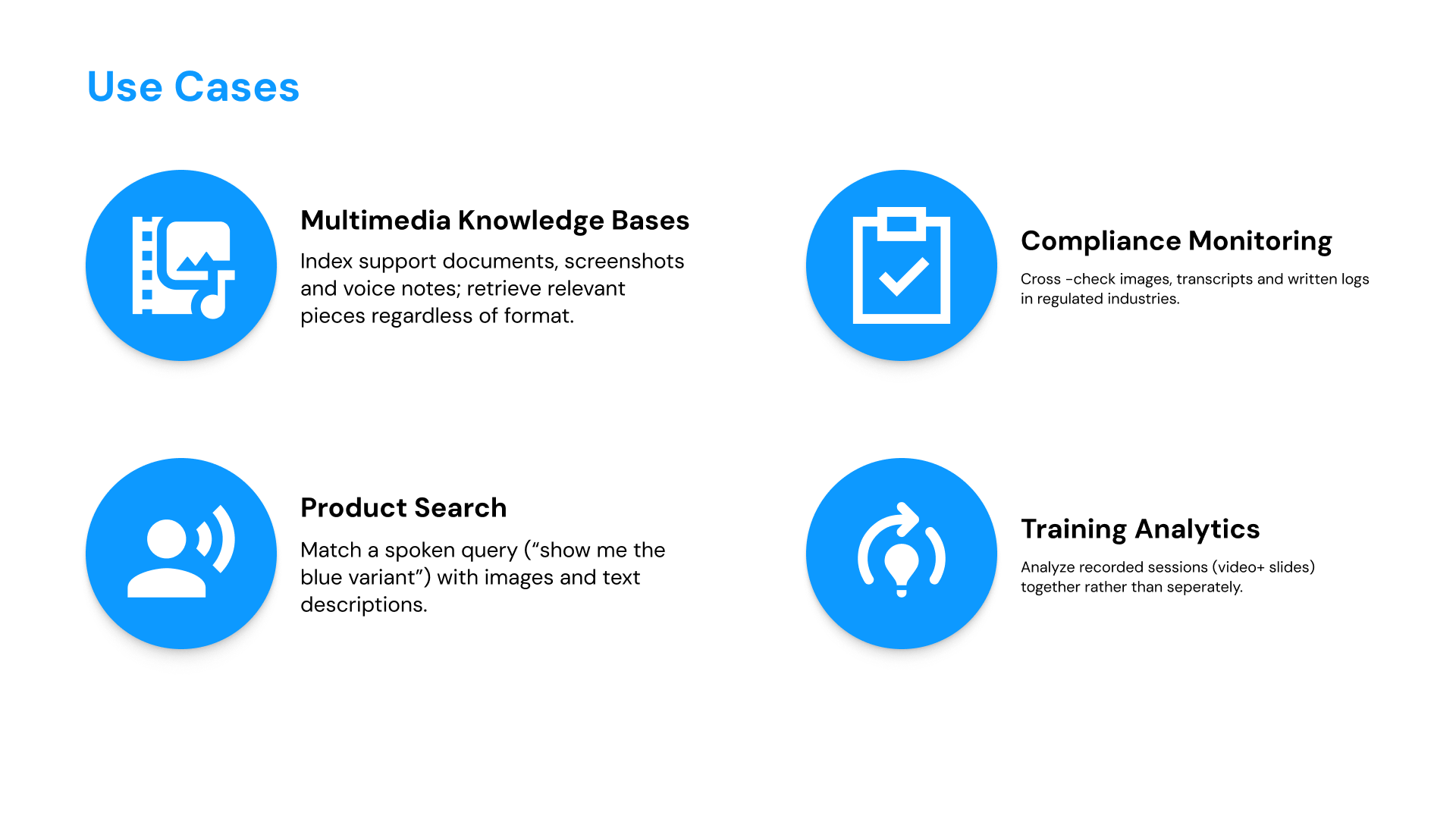
    Humans naturally combine multiple senses to understand context. Multimodal embeddings give machines a similar capability, mapping text, images, and sounds into a shared meaning space, unlocking better search, smarter generation, and more intuitive user experiences.

    At DataNeuron, we’re extending our platform from text-centric RAG to truly multimodal RAG. By supporting both “convert to text first” and “direct multimodal embedding” approaches, in addition to offering open-source and paid models, we provide customers with flexibility and scalability.
  • The Evolution from Text-Only AI to Multimodal RAG

    The Evolution from Text-Only AI to Multimodal RAG

    For years, Retrieval-Augmented Generation (RAG) systems have relied exclusively on text, from extracting, embedding, and generating knowledge purely from written data. That worked well for documents, PDFs, or transcripts. But enterprise data today is far more diverse and complex than plain text.

    Think about how information really flows in an organization:

    • Engineers exchange dashboards and visual reports.
    • The design team shares annotated screenshots.
    • Customer support records voice logs.
    • Marketing stores campaign videos and infographics.

    Each of these contains context that a text-only RAG cannot interpret or retrieve. The system would miss insights locked inside images, audio, or visual reports simply because it only “understands” text. 

    That’s where multimodal RAG comes into the picture. It allows large language models (LLMs) to retrieve and reason across multiple data formats (text, image, audio, and more) in a unified workflow. Instead of flattening everything into text, multimodal RAG brings together the semantics of different modalities to create more contextual and human-like responses.

    How Multimodal RAG Works

    At its core, multimodal RAG enhances traditional RAG pipelines by integrating data from multiple modalities into a single retrieval framework. There are two primary approaches that DataNeuron supports:

    1. Transform Everything into Text (Text-Centric Multimodal RAG)

    In this approach, all data types — whether image, video, or audio are converted into descriptive text before processing.

    • Images → converted into captions or alt-text using vision models.
    • Audio or video → transcribed into text using speech recognition.

    Once everything is transformed into text, the RAG pipeline proceeds as usual:
    The text data is chunked, embedded using a text embedding model (OpenAI, etc.), stored in a vector database, and used for retrieval and augmentation during generation.

    Advantages:

    • Easy to implement and integrates with existing RAG systems.
    • Leverages mature text embedding models and infrastructure.

    Limitations:

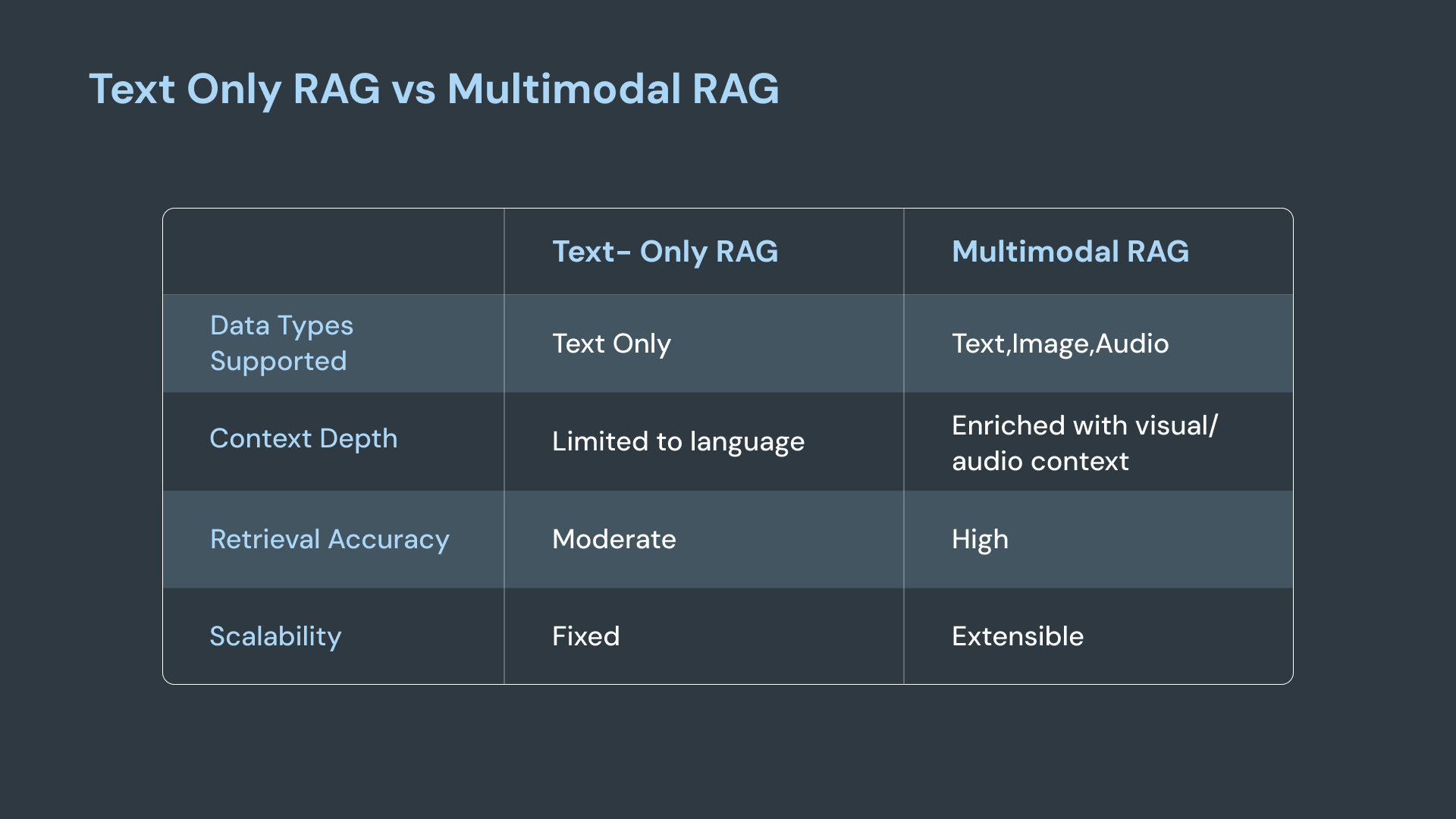
    • Some modality-specific context may be lost during text conversion (e.g., image tone, sound quality).
    • Requires extra preprocessing and storage overhead.

    This method forms the foundation of DataNeuron’s current multimodal pipeline, ensuring a smooth path for teams who want to start experimenting with multimodal inputs without changing their RAG setup.

    2. Native Multimodal RAG (Unified Embeddings for Mixed Formats)

    The second approach skips the text conversion layer. Instead, it uses embedding models that natively support multiple modalities, meaning they can directly process and represent text, images, and audio together in a shared vector space.

    Models like CLIP (Contrastive Language Image Pre-training) and AudioCLIP are examples of this. They learn relationships between modalities. For instance, aligning an image with its caption or an audio clip with its textual label, so that both the image and the text share semantic proximity in vector space.

    Advantages:

    • With higher accuracy, the original semantic and visual information is preserved.
    • Enables advanced search and retrieval (e.g., querying an image database using text, or retrieving audio clips related to a written description).

    Limitations:

    • Computationally heavier and more complex to fine-tune.
    • Fewer mature models are available today compared to text embeddings.

    At DataNeuron, we are actively experimenting with both open-source (e.g., OpenCLIP) and enterprise-grade (paid) embedding models to power multimodal RAG. This dual strategy gives users flexibility to balance performance, cost, and deployment preferences.

    Benefits of Multimodal RAG over Text-Only AI

    Transitioning from text-only RAG to multimodal RAG is a shift toward complete context understanding. Here’s how multimodal RAG enhances intelligence across business workflows:

    1. Deeper Contextual Retrieval

    In text-only RAG, context retrieval depends on written tokens. With multimodal RAG, the system can relate text to associated visuals or audio cues.
    For example, instead of returning only a report, a query like “show me the marketing campaign for Q2” can also retrieve the campaign poster, promotional video snippets, or screenshots from the presentation deck, all semantically aligned in one search.

    2. Unified Knowledge Base

    Multimodal RAG consolidates multiple data silos (PDFs, images, voice logs, infographics) into a single retrieval layer, so teams no longer have to manage separate tools or manual preprocessing. This unified vector store ensures that information from all sources contributes equally to the model’s reasoning.

    3. Enhanced Accuracy in Generation

    By retrieving semantically linked data across formats, multimodal RAG provides a richer grounding context to LLMs. This leads to more accurate and contextually relevant responses, especially in cases where visual or auditory cues complement text (e.g., summarizing a product design image along with its specs).

    4. Scalability Across Data Types

    Enterprise data continues to diversify from 3D visuals to real-time sensor logs. A multimodal RAG pipeline is future-ready, capable of adapting to new formats without rebuilding the system from scratch.

    5. Operational Efficiency

    Rather than running separate AI systems for each data type (text, image, or audio), multimodal RAG centralizes embedding, indexing, and retrieval. This simplifies maintenance, reduces compute duplication, and accelerates development cycles.

    Together, these changes make multimodal RAG a natural evolution for enterprise AI platforms like DataNeuron, where knowledge is never just text but a blend of visuals, speech, and data.

  • Why Versioning Will Define the Next Wave of MLOps

    Why Versioning Will Define the Next Wave of MLOps

    Most failures in production AI systems do not originate from flawed architectures or suboptimal algorithms. They stem from data. As real-world inputs diverge from the data used during training, model performance deteriorates without a precise record of what changed and when, teams are forced into reactive debugging with limited visibility.


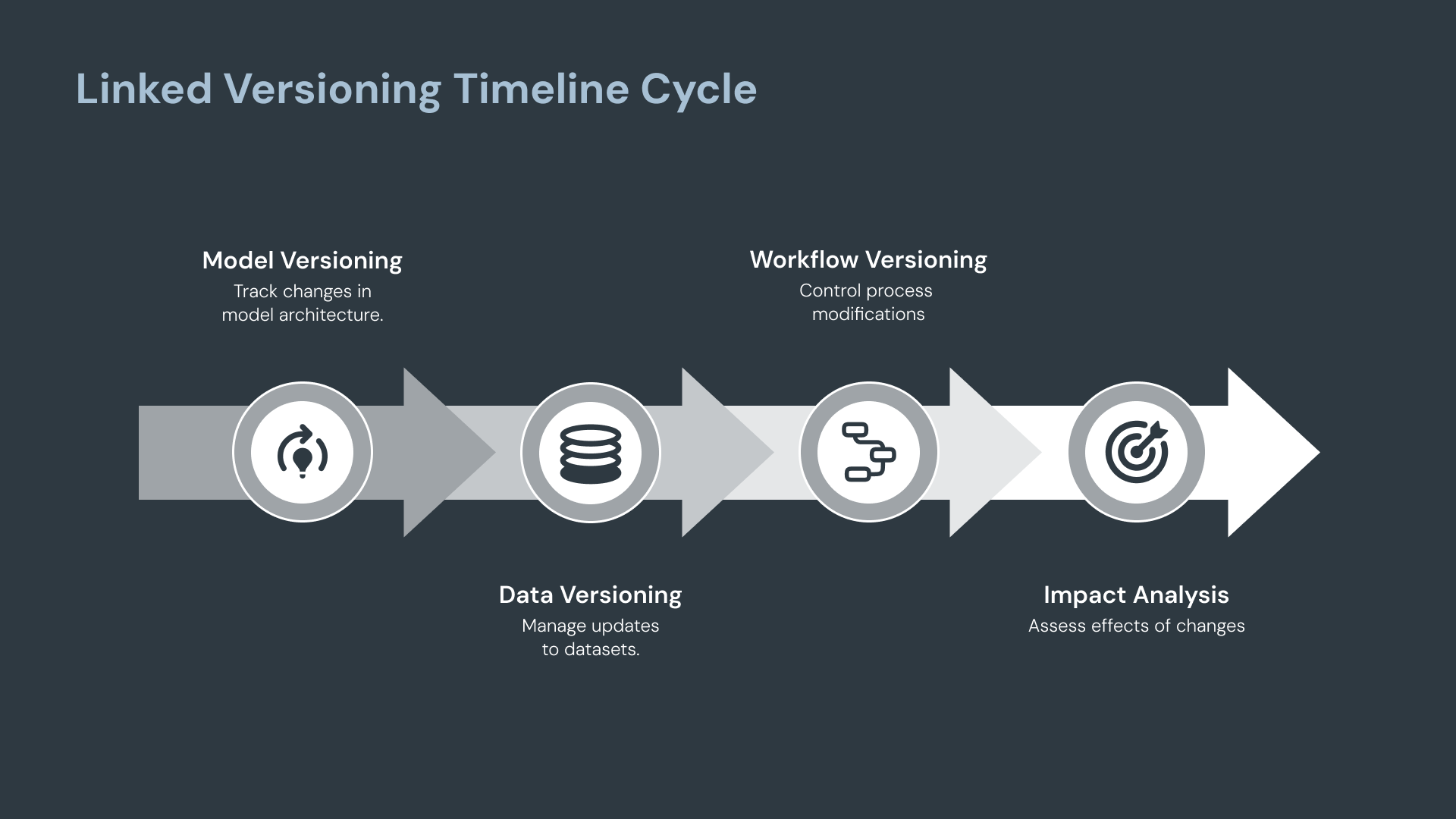
    Versioning introduces structure into this complexity. Maintaining a living history of datasets and workflows enables teams to trace changes, compare alternatives, and restore known-good states. With large language models continuously fed by updated corpora, corrected labels, and evolving prompts, versioning has become foundational to reproducibility, traceability, and reliable deployment. In MLOps, this shift is comparable to the transition from ad-hoc scripting to CI/CD in DevOps.

    Model Versioning: A Solved Problem, in Isolation

    Model versioning is now a well-established practice. Modern MLOps platforms make it straightforward to track trained models, their hyperparameters, and evaluation metrics. Teams routinely rely on these capabilities to:

    • Compare architectures and tuning strategies
    • Roll back to earlier checkpoints
    • Verify which model version was deployed

    However, model versioning alone provides an incomplete picture. A model trained on Dataset A will behave differently from the same model trained on Dataset B, even if all configurations remain unchanged. Without a clear link between models and the exact data used to train them, reproducibility breaks down.

    Data Versioning: The Missing Half of LLM Operations

    Large language models amplify this problem. LLM performance is tightly coupled to training data composition, ordering, preprocessing, and incremental updates. Fine-tuning the same base model on slightly different datasets can lead to materially different outputs. Hence, effective LLMOps requires treating data versioning with the same rigor as model versioning. This shift is driven by several forces:

    1. Regulatory and Audit Requirements

    In regulated industries, it is not sufficient to know that a dataset changed. Organizations must know who made the change, when it occurred, and why. Data versioning preserves authorship, timestamps, and contextual metadata for every snapshot, enabling audit-ready workflows.

    2. Scaling Unstructured and Semi-Structured Data

    LLMs rely on vast volumes of text, documents, logs, and conversational data that change continuously. These inputs cannot be managed manually or tracked reliably without version control.

    3. Managing Drift in Long-Lived LLMs

    LLMs deployed in production degrade over time as user behavior, language patterns, and knowledge domains evolve. Addressing this drift requires knowing exactly which data version produced the current behavior before introducing updates.

    4. Collaboration Across Teams

    LLMOps is inherently cross-functional. Data scientists, ML engineers, and platform teams often work on shared datasets and prompts. Versioning prevents accidental overwrites, duplication, and untraceable changes.

    Recent advances in tooling have lowered the barrier significantly. What once required custom pipelines and manual bookkeeping can now be integrated directly into production workflows.

    Why Model and Data Versioning Must Work Together

    In enterprise LLM systems, versioning cannot exist in silos. Teams need unified visibility across models, data, and pipelines. For any deployed model, they must be able to answer:

    • Which dataset version was used for fine-tuning?
    • Which preprocessing and prompt transformations were applied?
    • Which configuration produced the observed behavior?

    This linkage transforms LLM development from an experimental process into a reproducible engineering discipline. It also enables transparency. When an output is questioned, teams can trace it back to the exact data snapshot and model configuration that generated it.


    A Practical Example from LLM Operations

    Consider an LLM initially fine-tuned on a curated dataset and deployed into production. Over time, new data becomes available. The fresh documents, updated terminology, and emerging use cases. The model’s performance on newer queries begins to decline.

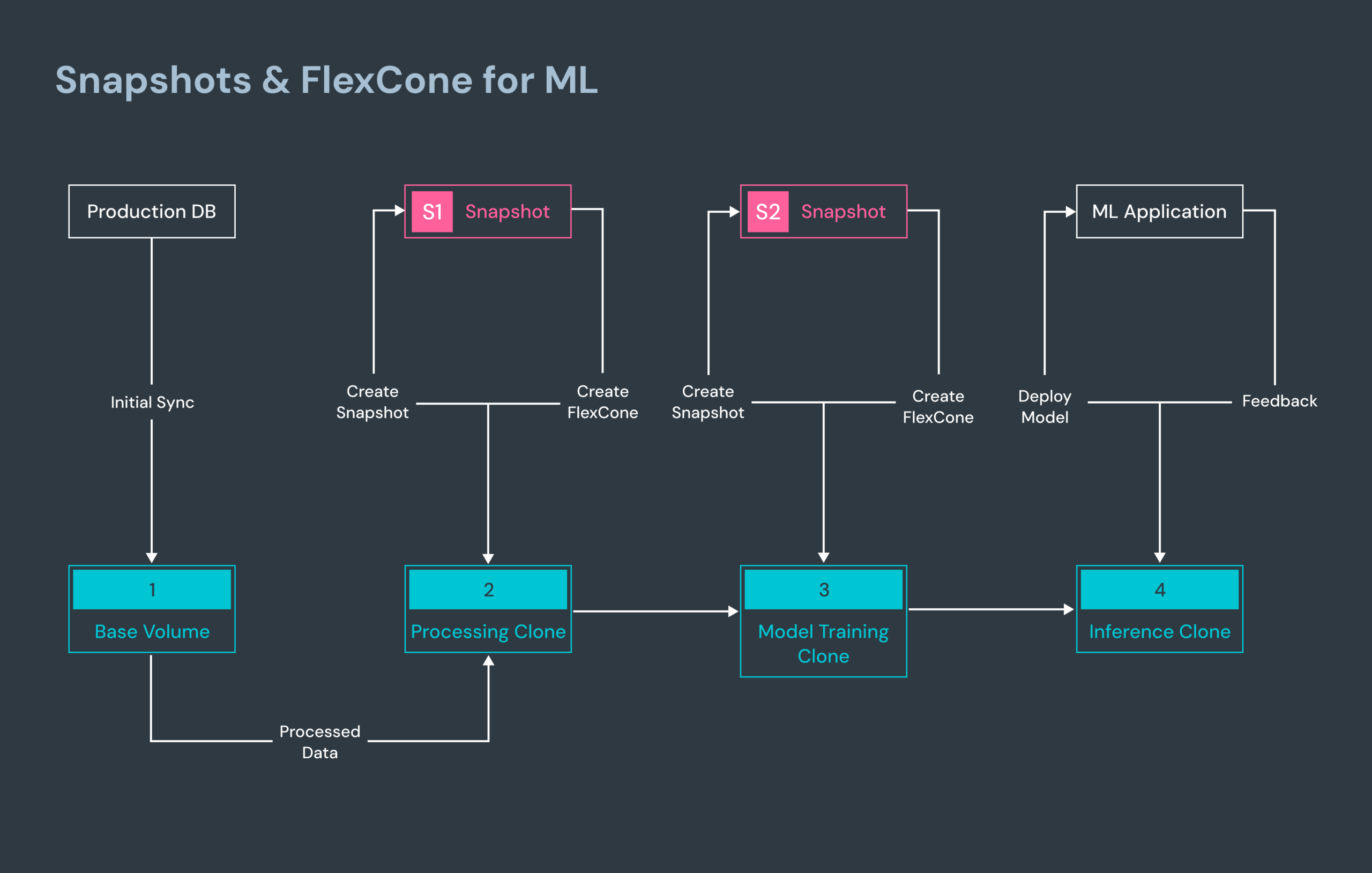
    Without versioning, teams often rebuild the pipeline from scratch, re-ingesting all data and repeating every step. With data versioning in place, the process changes fundamentally. The original dataset can be cloned, new data appended, and fine-tuning resumed from a known state. There is no need to redo the entire workflow, saving both time and computational cost while preserving reproducibility.

    How DataNeuron Extends Versioning Beyond Data

    Traditional data versioning focuses on snapshotting datasets. At DataNeuron, we extend this concept to the entire LLM training and fine-tuning workflow.

    This approach draws inspiration from enterprise storage systems, where snapshots and clone-based architectures allow teams to create space-efficient copies, roll back to specific points in time, and re-run workloads without re-ingestion. We apply the same principles to LLMOps.

    Fork at Any Stage

    LLM fine-tuning workflows often span multiple stages, from ingestion and preprocessing to tuning and evaluation. Without versioning, discovering an issue late in the pipeline forces teams to restart from the beginning. With DataNeuron, workflows can be forked at any stage, configurations adjusted, and execution resumed immediately.

    Parallel Versions for Faster Iteration

    Teams can maintain multiple datasets and workflow versions in parallel, enabling side-by-side experimentation instead of slow, sequential runs. This dramatically reduces iteration cycles for LLM fine-tuning.

    Built-In Benchmarking

    Parallel versions allow direct comparison of model responses across the same prompts and queries. Benchmarking becomes part of the workflow, not a separate exercise.

    Unified Multi-Version View

    DataNeuron’s upcoming interface will allow users to query multiple fine-tuned versions simultaneously and view responses on a single screen. Differences in behavior become immediately visible, enabling faster and more confident deployment decisions.

    Why This Matters for Enterprise AI

    As enterprises converge DevOps and MLOps, unified versioning across data, models, and pipelines becomes critical. While existing tools have brought data versioning into mainstream adoption, DataNeuron goes further by enabling cloning, forking, and benchmarking designed specifically for LLM-scale workloads.

    At scale, the organizations that succeed will be those that can switch between versions effortlessly, compare outcomes intelligently, and roll back confidently. Versioning is no longer an operational detail. It is the backbone of reliable, auditable, and high-velocity LLM deployment.

  • RAG or Fine-Tuning? A Clear Guide to Using Both

    RAG or Fine-Tuning? A Clear Guide to Using Both

    In the rush to implement AI across organizational operations, one must strike a balance between adaptability and accuracy. Should you rely on retrieval-based intelligence to maintain agility, or should you hardwire experience into the model to ensure precision?

    This is a strategic decision, and making the right call at the right time can determine the success of everything from automated policy interpretation to conversational AI. Both offer paths to smarter AI; however, they serve different needs, and selecting the wrong one can be the difference between insight and illusion.

    RAG: Fast, Flexible, and Context-Aware

    Retrieval-Augmented Generation (RAG) is where most organizations begin their journey. Instead of retraining an LLM, RAG enhances its responses by pulling real-time context from a vector database. Here’s how it works:

    1. Vector Encoding: Your documents or knowledge base are embedded into a vector store.
    2. Prompt Engineering: At inference time, the user’s query triggers a semantic search.
    3. Dynamic Injection: Relevant documents are retrieved and included in the prompt.
    4. LLM Response: The model uses this injected context to generate a grounded, informed response.

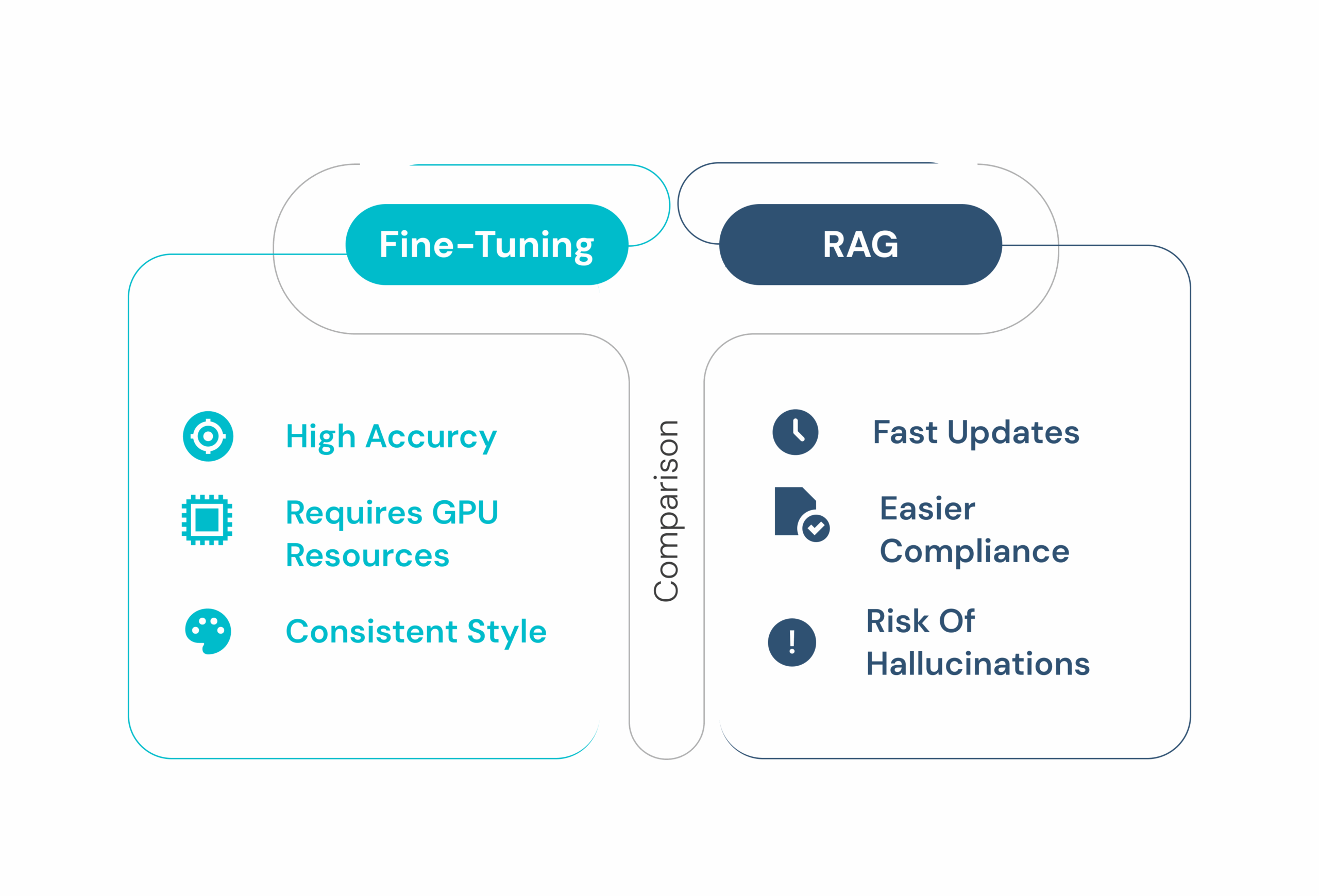
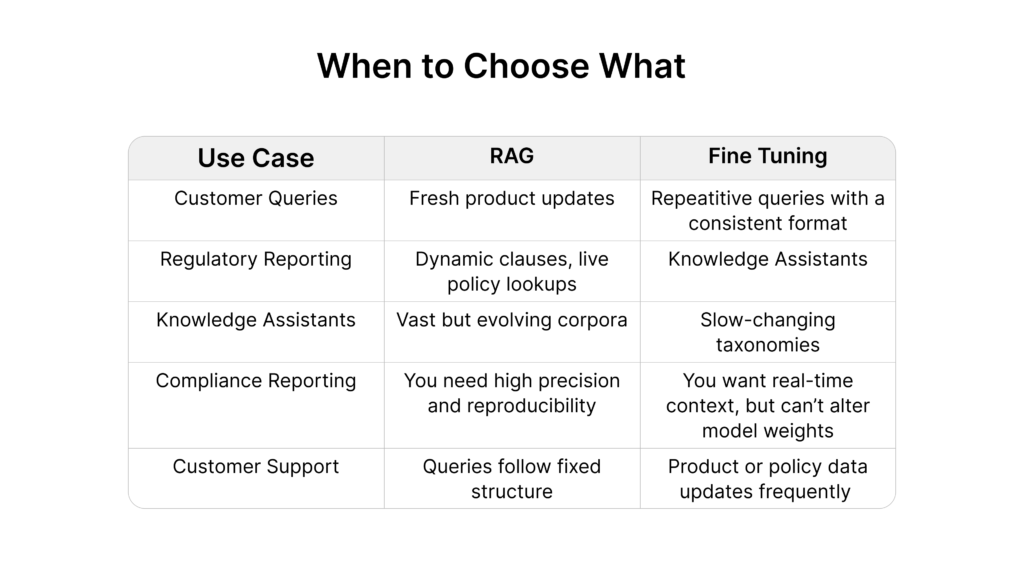
    This process is compute-efficient, versionless, and ideal when knowledge is fluid or frequently updated, such as government policies, IoT feeds, or legal frameworks.

    Where Does RAG End?

    While RAG excels at injecting facts, it has limitations:

    • It can’t teach the model how to reason.
    • It doesn’t enforce stylistic consistency.
    • And when retrieval fails, hallucinations creep in.

    That’s your cue: when structure, tone, or deterministic behavior become priorities or when retrieved content isn’t enough to answer correctly, you transition to fine-tuning.

    Enter Fine-Tuning: Precision with Permanence

    Fine-tuning involves retraining the base model on your domain-specific data, embedding domain-specific language, decision logic, and formatting directly into its parameters.

    This is essential when:

    • You want consistent behavioral patterns (e.g., legal summaries, medical reports).
    • You need high accuracy where the retrieval is partially optimal or completely absent.
    • Your workflows involve fixed taxonomies or templates.
    • Hallucination pt.

    Fine-tuning embeds knowledge deep into the model for deterministic output.

    Build Both With DataNeuron Without Building Infrastructure

    Unlike fragmented ML stacks, DataNeuron lets you orchestrate RAG and fine-tuning in a single interface. Most platforms force teams to juggle disconnected tools just to get a basic RAG or fine-tuning pipeline running. DataNeuron changes that.

    • Unified no-code interface to design, chain, and orchestrate both RAG and fine-tuning workflows without DevOps dependency
    • DSEAL powered Dataset Curation to automatically generate high-quality, diverse datasets, structured and ready for fine-tuning with minimal manual prep
    • Built-in prompt design tools to help structure and adapt inputs for both generation and retrieval use cases
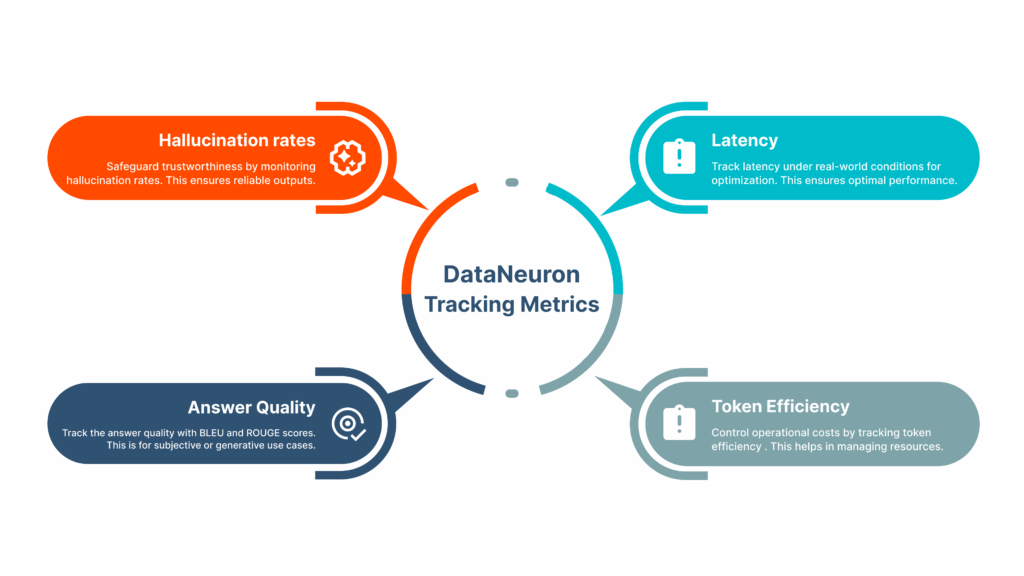
    • Robust evaluation system that supports multi-layered, continuous testing spanning BLEU/ROUGE scoring, hallucination tracking, and relevance validation, ensuring quality improves over time
    • Versioned model tracking and performance comparison across iterations, helping teams refine workflows based on clear, measurable outcomes

    Use DataNeuron to monitor and iterate across both workflows. 

    1. Fine-tune the LLM for tone, structure, and in-domain reasoning.
    2. Layer in RAG to supply the most recent facts or data points.

    This hybrid pattern ensures that your AI communicates reliably and stays up to date.

    These metrics help ensure both your fine-tuned and RAG-based pipelines stay grounded, efficient, and aligned with real-world expectations.

    Start Smart with DataNeuron

    • A customer support team used fine-tuning on 10,000 Q&A pairs and cut error rates by 40%.
    • A public sector client layered RAG into live deployments across 50+ policies, with no retraining needed.

    Both teams used the same platform. One interface. Multiple workflows. Wherever you are in your AI journey, DataNeuron gets you moving quickly.

  • A2A:  The Rulebook Governing Multi-Agent Collaboration

    A2A:  The Rulebook Governing Multi-Agent Collaboration

    If the internet allowed everyone to send data, but there were no rules (like HTTP, TCP/IP, or DNS) on how to format, interpret, or verify it. One site would send text as images, another as binary, and another with no headers. You could connect, but you’d rarely understand what was sent. That’s what MAS looks like without A2A (Agent-to-Agent Protocol)

    The Model Context Protocol (MCP) gives multi-agent systems (MAS) a shared communication channel. A2A provides the contractual rules of interaction, making them reliable enough for enterprise and cross-organizational use.

    Why Multi-Agent Systems Struggle Without A2A

    Even with a strong communication layer (MCP), MAS still face critical shortcomings when there’s no governing protocol like A2A:

    • Ambiguity of meaning
    • Lack of trust 
    • Security vulnerabilities 
    • Compliance gaps
    • Cross-boundary failures 

    In short, without A2A, multi-agent systems remain prone to misalignment and unsuitable for real-world enterprise environments.

    How A2A Works

    A2A operates through a set of principles that bring clarity and governance to MAS:

    1. Structured Messages
      Every message comes with a strict schema with defined types, context, and intent, so ambiguity is removed.
    2. Authentication & Trust
      Messages can be cryptographically signed, allowing agents to verify the sender’s identity and authority.
    3. Validation Rules
      Before acting, agents validate whether a message conforms to agreed-upon standards.
    4. Governance Layer
      A2A encodes rules of interaction: who can do what, under what conditions, and with what accountability.
    5. Cross-Boundary Collaboration
      Agents across organizations or domains can work together without being tightly coupled, thanks to standardized contracts.

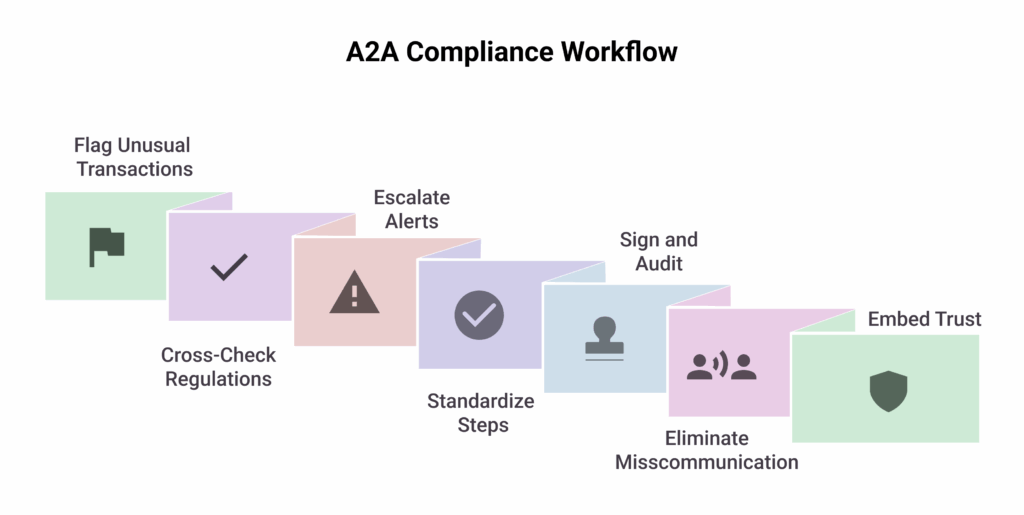
    A2A in Action: 

    With A2A, every step is standardized, signed, and auditable. 

    By building A2A into our platform, we ensure that agent-to-agent communication isn’t just possible, but governed and reliable. This approach helps organizations:

    • Operate multi-department workflows with confidence.
    • Collaborate securely with external vendors’ agents.
    • Maintain compliance without adding manual oversight.

    Our mission is to make MAS not only intelligent but also accountable. A2A is the step that makes that possible.

    Why A2A Shapes the Future of Agentic AI

    Looking ahead, we believe A2A will define how agent ecosystems evolve in three key ways:

    1. Governed Autonomy
      Agents won’t just act independently; they’ll act within enforceable rules and standards.
    2. Cross-Organizational Collaboration
      As businesses connect agents across ecosystems, A2A will be the “link language” that ensures safe cooperation.
    3. Trusted Intelligence
      Enterprises will demand explainable, auditable AI- A2A provides the contractual layer to deliver it.

    At DataNeuron, we move toward ecosystems of interoperable agents, and we believe A2A will be the reason they can do so with confidence.

  • The Agentic AI Toolbook: Smarter Tools for Smarter Outcomes

    The Agentic AI Toolbook: Smarter Tools for Smarter Outcomes

    For years, enterprise AI conversations have revolved around agents. The autonomous entities that plan, reason, and act. In slide decks and product pitches, the agent is portrayed as a brain: it processes inputs, makes decisions, and produces outputs. But when you peel back the layers of a real system, a different story emerges. The agent is only as powerful as the tools it can call.

    The new Agentic AI systems are expected not only to reason but also to execute. Before we talk about tools, let’s clarify what an agent really is and why, at DataNeuron, we believe the toolbook deserves just as much attention as the agent itself.

    What an Agent Really Does

    An agent handles the thinking and decision-making, while tools handle the doing. Tools perform the actual actions, such as classifying text, scraping websites, sending emails, pulling data from CRMs, or writing into dashboards. Without tools, an agent can process information but can’t take action. In short, the agent decides what needs to be done and when.

    From Reasoning to Action

    This is where the execution layer comes in. Tools translate an agent’s intent into real-world action. Crucially, the agent doesn’t have to know how each tool works internally; it only needs to know three things:

    What the tool does

    What input to give it

    What output to expect

    This clean separation of reasoning (agent) and execution (tools) keeps systems modular, interpretable, and easy to govern. You can upgrade or swap out tools without retraining the agent, catering to what large enterprises need: faster iteration cycles and safer deployments.

    A Quick Scenario–Customer Support

    Suppose your AI receives the task “analyze complaints and send a summary to the team.” A traditional chatbot would try to handle everything within a single model. An agentic system built on DataNeuron does it differently:

    • Fetches customer history from the CRM using an API-based tool.
    • Classifies the complaint and extracts order IDs using DataNeuron Native Tools, such as multiclass classifiers and NER.
    • Retrieves troubleshooting steps via Structured RAG.
    • Summarizes the case with a custom tool configured by your support ops team.
    • Sends an acknowledgment using an external mail connector.

    The result is an automated pipeline that used to require manual coordination across multiple teams.

    Inside the DataNeuron Toolbook

    At DataNeuron, we built the Toolbook to make this orchestration simple and scalable. Instead of hand-coding workflows, users can select from a library of pre-built tools or define their own. Everything is callable through standard input/output schemas so that the agent can pick and mix tools without brittle integrations.

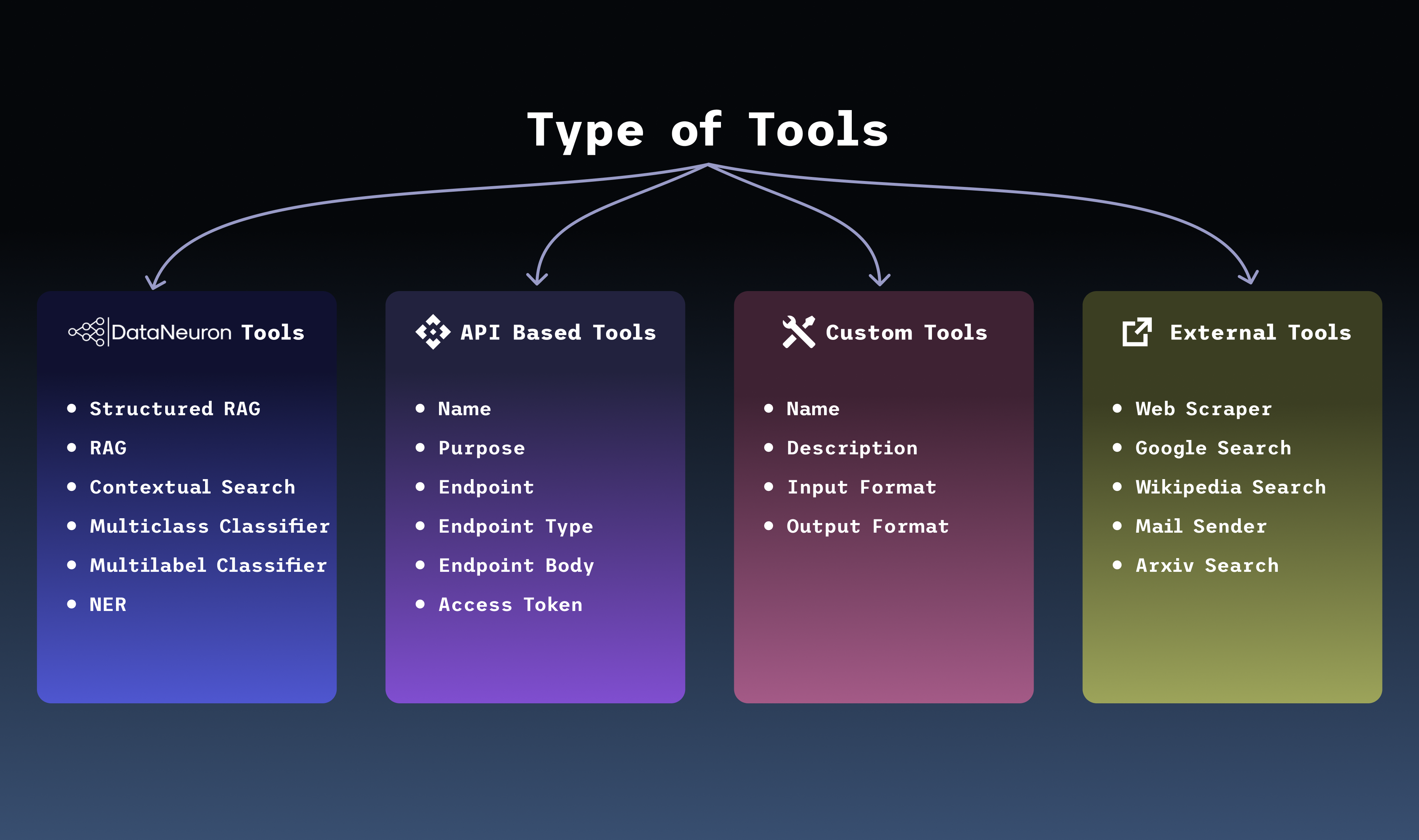
    We organize our toolbook into four pillars, each extending the agent’s reach differently.

    1. DataNeuron Native Tools

    These are our first creation in studio-high-utility, pre-configured tools optimized for AI workflows, often known as the “intelligence primitives” of your agent. They’re ready to call as soon as you deploy an agent:

    • Structured RAG (Retrieval-Augmented Generation): Combines document indexing with structured memory, letting agents pull curated data sets in real time. Ideal for regulatory documents, knowledge bases, or customer support manuals.
    • Contextual Search: Allows agents to query within a bounded knowledge base, perfect for domain-specific applications like legal, customer service, or biomedical agents.
    • Multiclass & Multilabel Classifiers: Let agents tag or categorize inputs, such as sorting customer feedback by sentiment and urgency or routing tickets to the right department.
    • Named Entity Recognition (NER): Extracts names, locations, products, and other entities, essential for parsing resumes, contracts, or customer emails.

    You don’t code these tools; you configure them. The agent calls them as needed, with predictable inputs and outputs.

    2. External Tools

    These extend the agent’s reach into the broader digital ecosystem. Think of them as bridges between your agent and the open web or third-party services. Examples include:

    • Web Scraper to pull structured data from webpages, prices, job postings, and event schedules.
    • Google, Wikipedia, and Arxiv Search for real-time knowledge retrieval, essential for summarizing or validating claims.
    • Mail Sender to automate communications, acknowledgments, follow-ups, and onboarding instructions.

    With external tools, your agent can enrich its answers, validate facts, and trigger outward-facing actions.

    3. Custom Tools

    Not every enterprise workflow fits into an off-the-shelf template. That’s why we let you create custom tools by simply defining:

    • name (e.g., “SummarizeComplaint”)
    • description (“Summarizes customer complaint emails into action items”)
    • input/output schema

    Based on this metadata, the DataNeuron platform generates a callable tool automatically. This is especially powerful in domains where business logic is unique, such as parsing health insurance claims, configuring automated compliance checks, or running internal analytics.

    You define what the tool does, not how it does it, while the system handles the integration.

    4. API-Based Tools

    These connect agents to external systems or databases, turning your AI from a smart assistant into an operational actor. You define the tool’s:

    • Name and purpose
    • API endpoint and method
    • Auth/token structure
    • Request/response format

    From there, the platform generates a tool that the agent can call. This enables workflows like:

    • Fetching real-time data from a food delivery backend.
    • Pushing recommendations into a CRM.
    • Triggering marketing campaigns.

    API-based tools let agents interact with your production systems securely and at scale.

    Let’s consider another scenario of a Digital Health Assistant

    To see how these pieces fit together, imagine a hospital deploying a digital health assistant for its doctors. A patient logs in and requests an explanation of their latest blood test report:

    • API-Based Tool fetches the patient’s lab results from the hospital’s CRM or EHR database.
    • DataNeuron Native Tools (NER + multilabel classifier + Structured RAG) extract key metrics, flag abnormal values, and pull relevant medical guidelines from an internal knowledge base.
    • Custom Tool created by the hospital’s analytics team generates a plain-language summary of the patient’s health status and next steps.
    • External Tools email the report to the patient and physician, and optionally pull the latest research articles to confirm if the doctor requests supporting evidence.

    All of this happens automatically. The agent decides the sequence of actions; each tool performs its specific function. Data is fetched, analyzed, explained, enriched with context, and delivered without the doctor or patient stitching the pieces together manually.

    Why This Matters?

    Moving from model-first to tool-first thinking turns AI from a smart assistant into an operational actor. Modular tools let agents take sequential actions toward complex goals while giving enterprises governance and flexibility: tools can be audited or swapped without altering the agent’s logic, new capabilities can be added like apps on a phone, and clear input/output schemas simplify security and compliance integration.

    The most valuable AI tool in the future won’t be the one that “knows” everything. It will be the one that knows how to get things done, and that’s exactly what the DataNeuron Agentic AI Toolbook is built for.

    At DataNeuron, we’re not trying to replace engineers, but giving them a new medium. Workflows can be designed using reusable tools, customized by intent, and executed by agents who know when and why to use them. Instead of one massive, brittle model, you get a living ecosystem where each component can evolve independently.

  • MCP: The Communication Backbone of Multi-Agent Systems

    MCP: The Communication Backbone of Multi-Agent Systems

    AI progress has been upgraded with larger models, more parameters, and bigger datasets. This created powerful Large Language Models (LLMs), but exposed their limits: even the best models falter in multi-domain workflows, hallucinate facts, lose context, and struggle with complex coordination.

    Multi-Agent Systems (MAS) emerged to address these gaps by deploying specialized agents for tasks like summarization, search, compliance checking, and analysis. Together, they can outperform a single model but only if they work coherently. In enterprise customer support, for example, one agent may retrieve knowledge, another analyze sentiment, and a third draft a reply. Without shared context, they duplicate work, contradict each other, or miss critical data.

    The Model Context Protocol (MCP) closes this gap. It standardizes how agents exchange state, intent, and outputs, turning isolated components into a coordinated, auditable system capable of reliable multi-step outcomes at scale.

    Why Current Multi-Agent Systems Fall Short

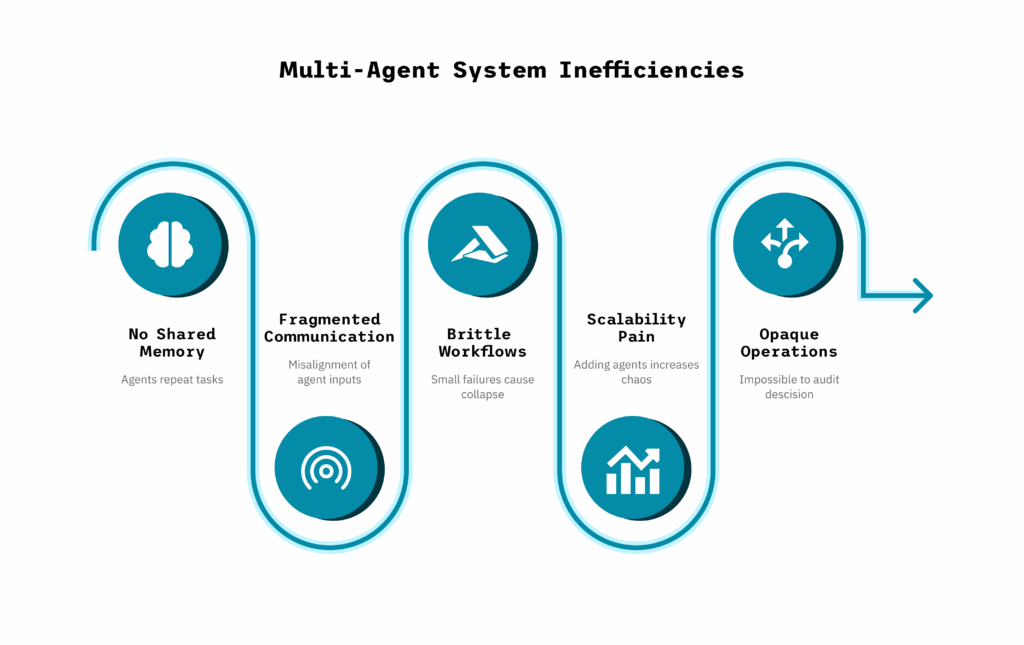
    Before understanding MCP, let’s look at what MAS misses without it:

    Today’s MAS often acts like loosely coupled tools rather than a synchronized team. The result is unpredictability, an unacceptable outcome for enterprise use cases where accuracy, compliance, and auditability matter.

    MCP: A Protocol Born of Necessity

    The Model Context Protocol (MCP) is a standardized communication framework that enables agents in a multi-agent system to “speak the same language.” Acting as both a universal translator and a message bus, MCP lets any agent, whether an LLM, retrieval engine, API connector, or compliance checker, exchange context reliably and consistently.

    How MCP Works

    At its core, MCP provides five foundational capabilities:

    • Standardized Messaging
    • Shared Memory Access
    • Publish/Subscribe Coordination
    • Dynamic Composi tion 
    • Medium-Agnostic Transport

    How would this work in Financial Compliance?

    Consider a bank’s compliance workflow:

    One agent ingests regulatory documents.

    Another checks transactions against relevant rules.

    A third summarizes the findings for auditors.

      With MCP, the pipeline is traceable, resilient, and composable: each agent publishes standardized outputs into a shared context, while downstream agents subscribe and act on verified data.

      MCP in Action at DataNeuron

      At DataNeuron, MCP is treated as the connective tissue of intelligent automation. MCP lets them expose functionality via an HTTP server, a studio server, or a custom API and register it under the MCP schema. From that moment, MCP handles orchestration: routing intent, synchronizing state, and coordinating workflows.

      This design allows us to:

      Integrate LLMs with retrieval engines and domain-specific APIs seamlessly.

      Orchestrate cross-departmental workflows without losing auditability.

      Scale agent ecosystems without creating central bottlenecks.

      By formalizing how agents communicate and share context, MCP converts fragmented tools into a unified, auditable, and scalable multi-agent system ready for real-world deployment.

      Why MCP Is Foundational to the Next Wave of Agentic AI

      Enterprise AI is moving away from monolithic, one-size-fits-all models toward modular, composable systems. In this new architecture, the MCP functions as the critical communication backbone, allowing intelligent agents to coordinate, adapt, and scale reliably.

      By standardizing how context, state, and intent flow between agents, MCP lays the groundwork for future-proof AI ecosystems. Three shifts illustrate this impact:

      Composable Intelligence

      Governed Autonomy 

      Cross-Ecosystem Interoperability 

      Taken together, these shifts position MCP as a cornerstone of scalable, auditable, and future-ready multi-agent systems. MCP is the infrastructure layer that enables businesses to design AI workflows that are as dynamic and trustworthy as the environments in which they operate.

    1. Beyond the “Looks Good to Me”: Why LLM Evals Are Your New Best Friend

      Beyond the “Looks Good to Me”: Why LLM Evals Are Your New Best Friend

      As large language models transition from lab experiments to real-world applications, the way we evaluate their performance must evolve. A casual thumbs-up after scanning a few outputs might be fine for a weekend project, but it doesn’t scale when users depend on models for accuracy, fairness, and reliability.

      LLM evaluations or evals do this job for you. They turn subjective impressions into structured, repeatable measurements. More precisely, evals transform the development process from intuition-driven tinkering into evidence-driven engineering, a shift that’s essential if we want LLMs to be more than just impressive demos.

      The Eval-Driven Development Cycle: Train, Evaluate, Repeat 

      At DataNeuron, evaluation (Eval) is the core of our fine-tuning process. We follow a 5-step, iterative loop designed to deliver smarter, domain-aligned models:

      1. Raw Docs

      The process starts with task definition. Whether you’re building a model for summarization, classification, or content generation, we first collect raw, real-world data, i.e., support tickets, reviews, emails, and chats, directly from your business context.

      2. Curated Evals

      We build specialized evaluation datasets distinct from the training data. These datasets are crafted to test specific capabilities using diverse prompts, edge cases, and real-world scenarios, ensuring relevance and rigor.

      3. LLM Fine-Tune

      We fine-tune your model (LLaMA, Mistral, Gemma, etc.) using task-appropriate data and lightweight methods like PEFT or DPO, built for efficiency and performance.

      4. Eval Results

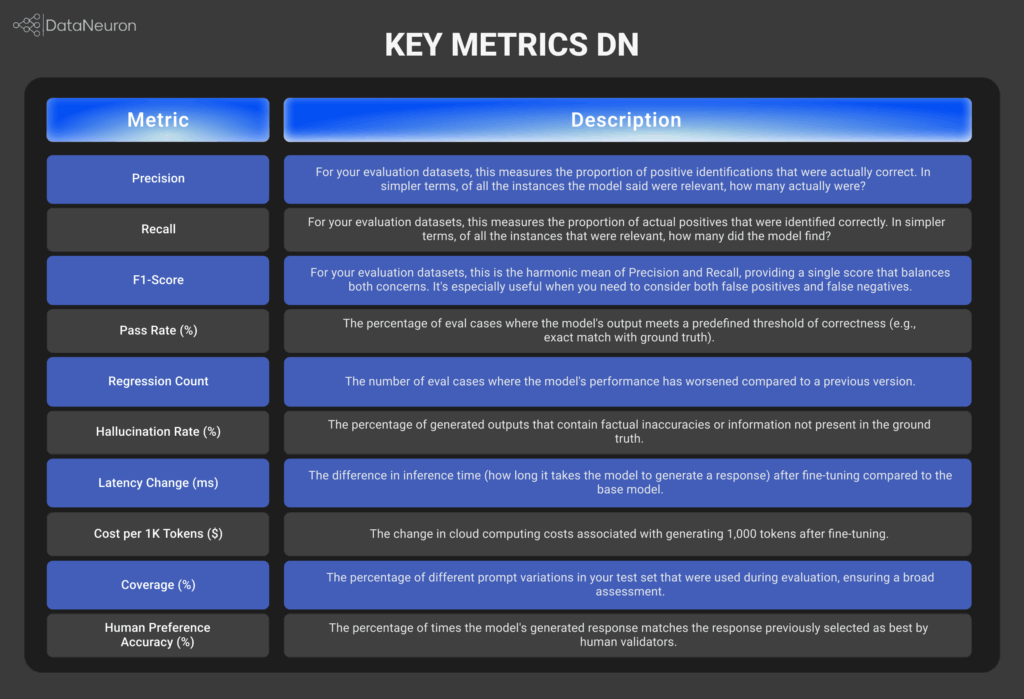
      We evaluate your model using curated prompts and subjective metrics like BLEU, ROUGE, and hallucination rate, tracking not just what the model generates, but how well it aligns with intended outcomes.

      5. Refinement Loop

      Based on eval feedback, we iterate, refining datasets, tweaking parameters, or rethinking the approach. This cycle continues until results meet your performance goals.

      Evals guide you towards better models by providing objective feedback at each stage, ensuring a more intelligent and efficient development cycle. So, what exactly goes into a robust LLM evaluation framework?

      Core Components of a Robust LLM Evaluation Framework

      Human Validation

      We recognize the invaluable role of human expertise in establishing accurate benchmarks. Our workflow enables the generation of multiple potential responses for a given prompt. Human validators then meticulously select the response that best aligns with the desired criteria. This human-approved selection serves as the definitive “gold standard” for our evaluations.

      Prompt Variations

      DataNeuron empowers users to define specific “eval contexts” and create diverse variations of prompts. This capability ensures that your model is rigorously evaluated across a broad spectrum of inputs, thereby thoroughly testing its robustness and generalization capabilities.

      Auto Tracking

      Our evaluation module automatically compares the responses generated by your fine-tuned model against the human-validated “gold standard.” This automated comparison facilitates the precise calculation of accuracy metrics and allows for the consistent tracking of how well your model aligns with human preferences. The fundamental principle here is that effective fine-tuning should lead the model to progressively generate responses that closely match those previously selected by human validators.

      Configurable Pipelines

      We prioritize flexibility and control. DataNeuron’s entire evaluation process is highly configurable, providing you with comprehensive command over every stage from data preprocessing and prompt generation to the selection of specific evaluation metrics.

      DataNeuron: Your Partner in Eval-Driven Fine-Tuning

      At DataNeuron, we’re building a comprehensive ecosystem to streamline your LLM journey, and Evals are a central piece of that puzzle. While we’re constantly evolving, here’s a glimpse of how DataNeuron empowers you with eval-driven fine-tuning:

      Core Tenets of DataNeuron’s Evaluation Methodology

      Human Validation:

      We recognize the invaluable role of human expertise in establishing accurate benchmarks. Our workflow enables the generation of multiple potential responses for a given prompt. Human validators then meticulously select the response that best aligns with the desired criteria. This human-approved selection serves as the definitive “gold standard” for our evaluations.

      Prompt Variations:

      DataNeuron empowers users to define specific “eval contexts” and create diverse variations of prompts. This capability ensures that your model is rigorously evaluated across a broad spectrum of inputs, thereby thoroughly testing its robustness and generalization capabilities.

      Auto Tracking:

      Our evaluation module automatically compares the responses generated by your fine-tuned model against the human-validated “gold standard.” This automated comparison facilitates the precise calculation of accuracy metrics and allows for the consistent tracking of how well your model aligns with human preferences. The fundamental principle here is that effective fine-tuning should lead the model to progressively generate responses that closely match those previously selected by human validators.

      Configurable Pipelines:

      We prioritize flexibility and control. DataNeuron’s entire evaluation process is highly configurable, providing you with comprehensive command over every stage from data preprocessing and prompt generation to the selection of specific evaluation metrics.

      Best Practices & Avoiding the Potholes

      Here are some hard-earned lessons to keep in mind when implementing eval-driven fine-tuning:

      Don’t Overfit to the Eval:

      Just like you can overfit your model to the training data, you can also overfit to your evaluation set. To avoid this, diversify your evaluation metrics and periodically refresh your test sets with new, unseen data.

      Beware of Eval Drift:

      The real-world data your model encounters can change over time. Ensure your evaluation datasets remain representative of this evolving reality by periodically updating them.

      Balance Latency and Quality:

      Fine-tuning can sometimes impact the inference speed of your model. Carefully consider the trade-off between improved quality and potential increases in latency, especially if your application has strict performance SLAs.

      With its focus on structured workflows and integration, DataNeuron urges users to build more reliable and effective LLM-powered applications. Moving beyond subjective assessments is crucial for unlocking the full potential of LLM fine-tuning. Evals provide the objective, data-driven insights you need to build high-performing, reliable models.

      At DataNeuron, we’re committed to making this process seamless and accessible, empowering you to fine-tune your LLMs and achieve remarkable results confidently.

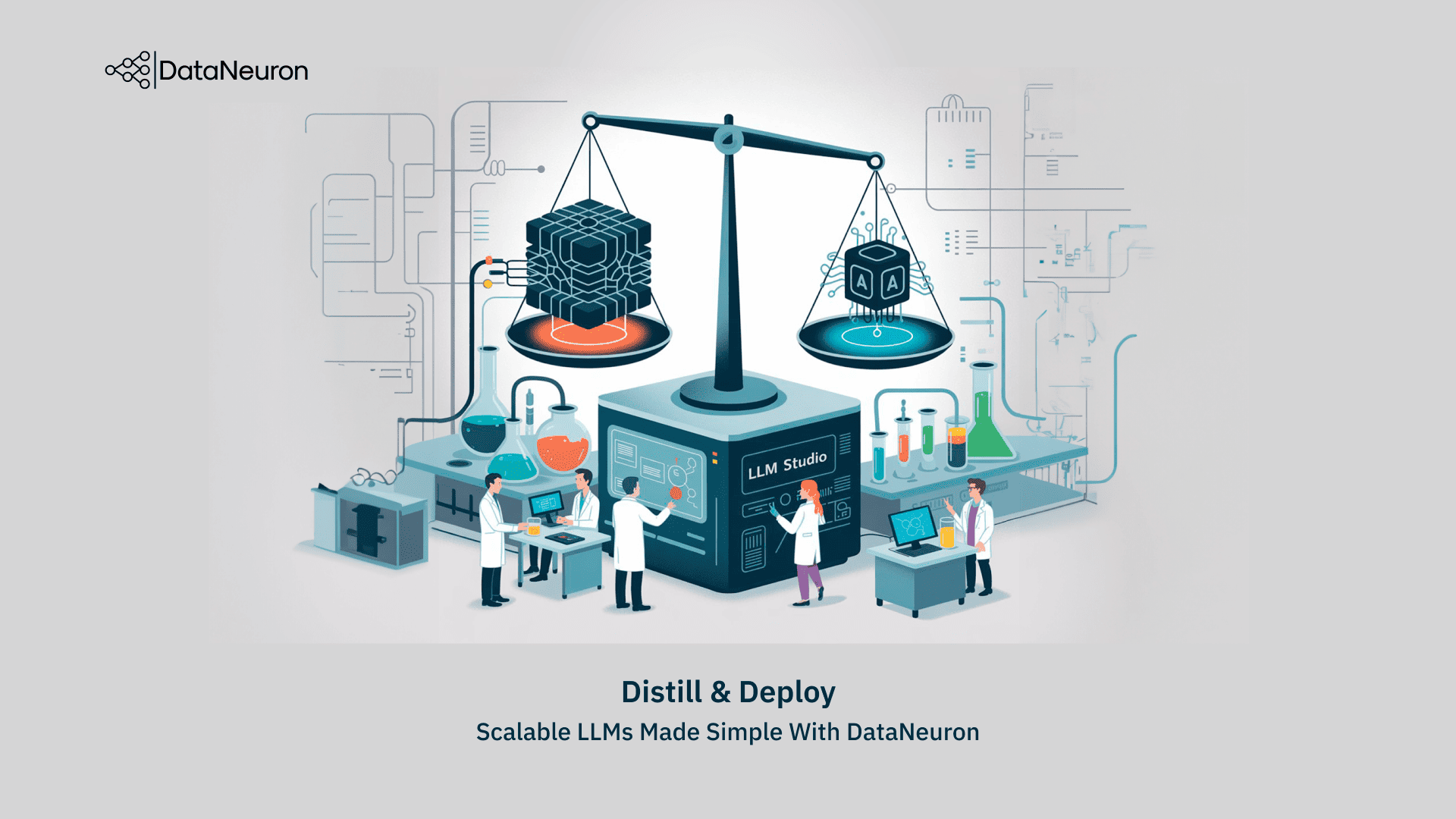
    2. Distill & Deploy: Scalable LLMs Made Simple With DataNeuron 

      Distill & Deploy: Scalable LLMs Made Simple With DataNeuron 

      Large Language Models (LLMs) like Llama and Mistral offer immense potential, but their massive size creates deployment challenges, as slow speeds and hefty operational costs hinder their real-world applications. When building a real-time application for your enterprise or aiming for budget deployment at scale, running a 13 B+ parameter model is impractical.

      This is where model distillation comes into play.

      Think of it as extracting the core wisdom of a highly knowledgeable “teacher” model and transferring it to a smaller, more agile “student” model. At DataNeuron, we’re revolutionizing this process with our LLM Studio. Our platform boasts a smooth workflow that integrates intelligent data curation with a powerful distillation engine that delivers:

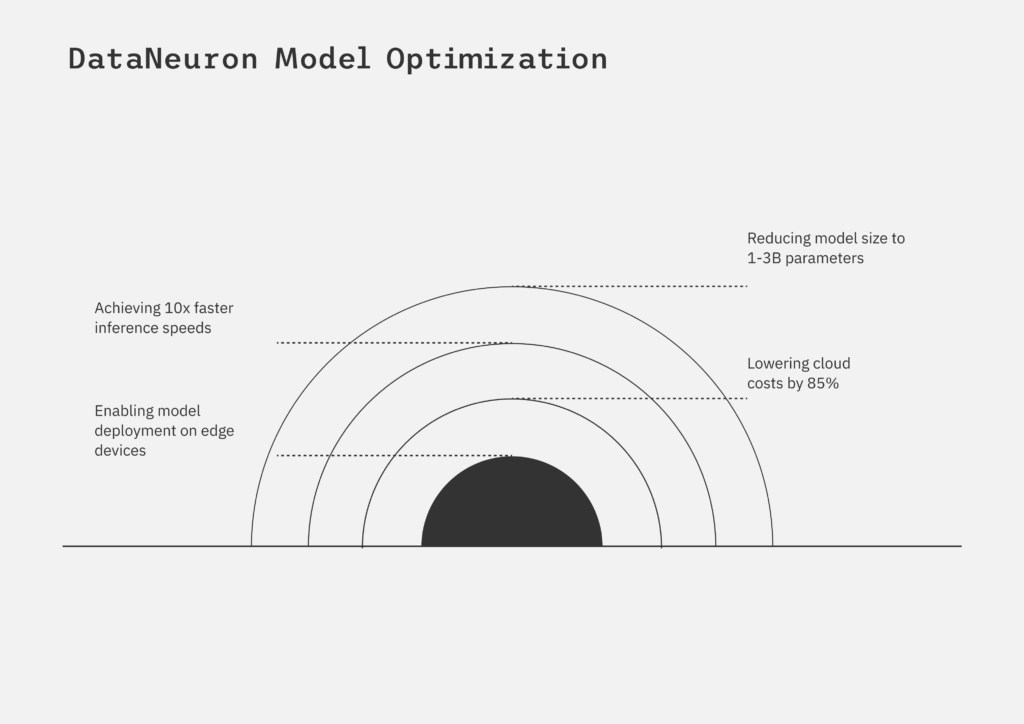
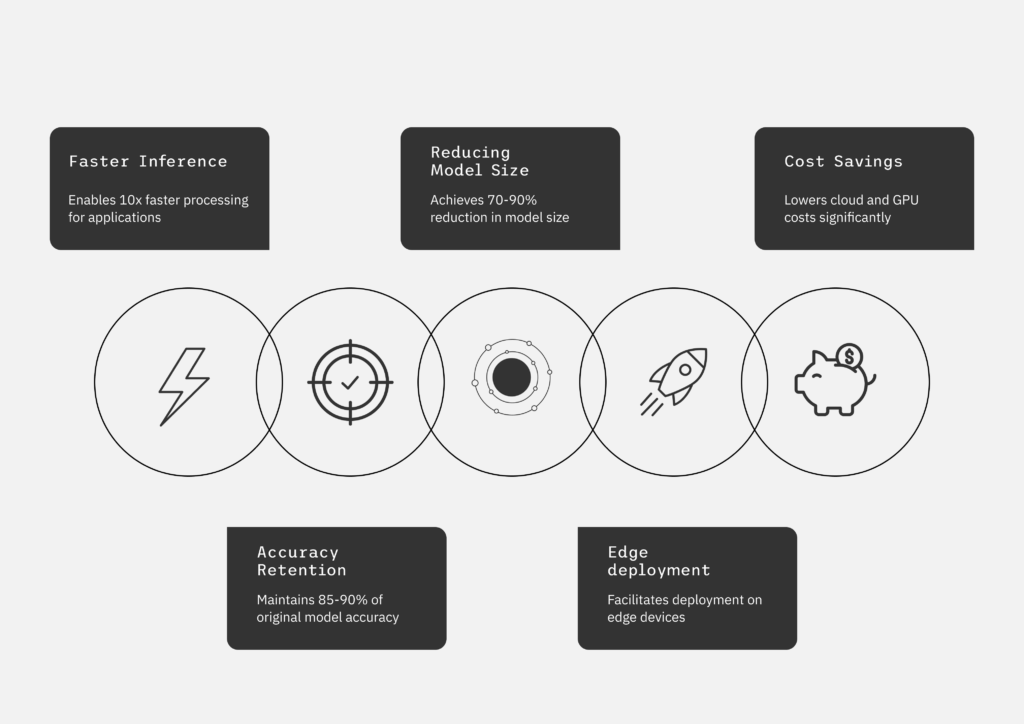
      • Up to 10X faster inference speed*
      • 90% reduction in model size*
      • Significant cost 
      • Saving on GPU infrastructure
      • High accuracy retention

      Why is Distillation a Game Changer?

      Deploying billion-parameter LLMs to production introduces four major bottlenecks:

      1. Latency: A few seconds of latency to produce responses from big models is not suitable for real-time use in conversational AI, customer, and real-time interactions
      2. Infrastructure Cost: LLMs are GPU-intensive. Executing one inference on a +13B model doesn’t sound like much until you are dealing with thousands of simultaneous users. Your cloud expenses surge quickly. A 13B parameter model might end up costing 5X more to execute than a distilled 2B version.
      3. Infrastructure Demand: Scaling mass models necessitates more powerful GPUs, scaled serving infrastructure, and continuous performance tuning. Deployment on devices becomes infeasible when model sizes exceed 5B parameters.
      4. Hallucinations: Larger models are more likely to produce inapt or irrelevant answers without proper tuning.

      Model distillation removes these limitations by transferring the “knowledge” from a large (teacher) model (e.g., Llama 13B) to a smaller (student) model (e.g., a Llama 1B), retaining performance but vastly improving efficiency. 

      Navigating the Pitfalls of Traditional Distillation

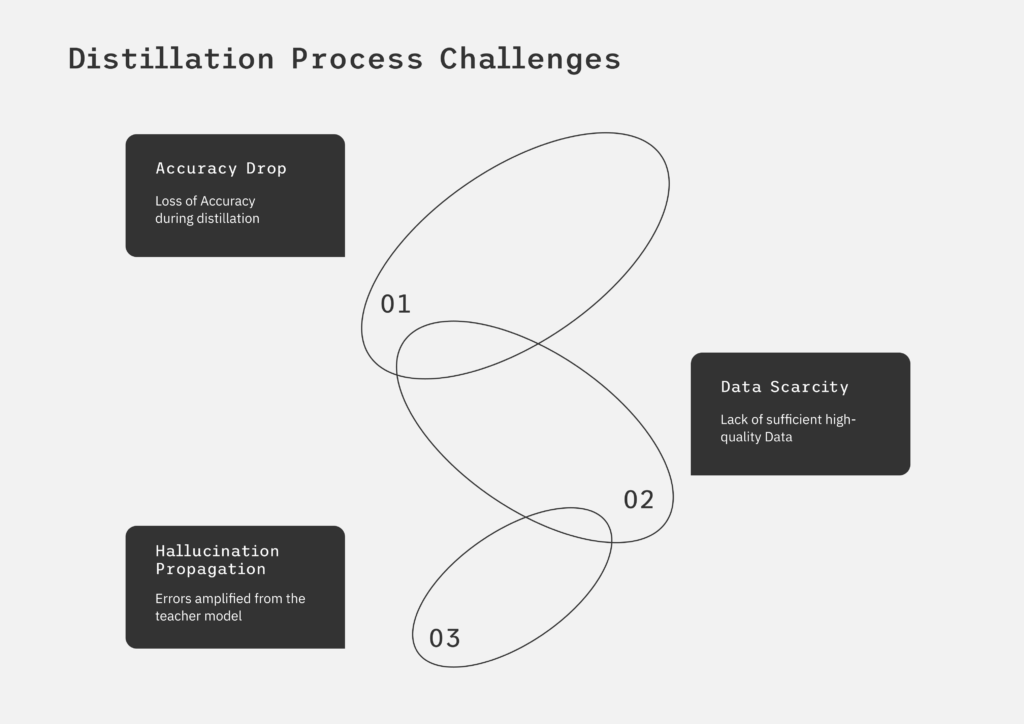
      Traditional model distillation trains a smaller “student” model to mimic a larger “teacher” by matching their outputs. While conceptually simple, valuable distillation is complex, involving careful data selection, proper loss functions (typically based on the teacher’s probability distributions for richer information transfer), and iterative testing with hyperparameters. For example, distilling a large language model for mobile deployment involves training a smaller model on relevant text, possibly incorporating the teacher’s predicted word probabilities to capture style variations.

      Without the right tools and technology to manage this complexity, the process can be time-consuming, error-prone, and difficult to scale, limiting the practical implementation of this efficiency-boosting technique.

      How is DataNeuron Doing Things Differently?

      LLM Studio allows you to easily design and manage lightweight, powerful models as per your needs. Our approach promotes intelligent data curation as the foundation for successful information transfer.

      Here’s how we streamline the process: 

      1. Data Selection with Divisive Sampling (D-SEAL) 

      We deploy our proprietary Divisive Sampling (D-SEAL) system to choose the most informative training data. D-SEAL groups comparable data points, ensuring that your student model learns from a diverse range of examples relevant to its target domain. This curated dataset, potentially built using prompts and responses generated by Retrieval-Augmented Generation (RAG), serves as the bedrock for effective distillation.

      For a detailed read, head to the NLP article on D-SEAL

      2. Intuitive Model Selection 

      Our platform features a user-friendly interface for knowledge distillation. You can easily select the Teacher Model available on the DataNeuron platform, such as a suitable high-performing model like Llama 2 70 B.

      For the Student Model, you have flexible parameter options to tailor the distilled output to your deployment requirements. Choose from the DataNeuron provided options such as Llama 2 1B, Llama 2 3B, or Llama 2 13B parameters, balancing model size, computational cost, and performance. These options allow you to optimize for various deployment environments.

      3. Distillation Engine

      The heart of LLM Studio is our powerful distillation engine, which transfers knowledge from the selected teacher model to the smaller student model. The platform handles the underlying complications, allowing you to focus on your desired outcome.

      4. Inference & Deployment 

      Once the distillation process is complete, LLM Studio allows for rapid lean model testing, evaluation, and deployment. You can easily export them for on-device use, integrate them using an API, or deploy them within your cloud infrastructure.

      DataNeuron: Beyond Just Smaller Model

      At DataNeuron, distillation does more than just shrinking the model size; we create smarter, cost-efficient, and universally deployable AI solutions. 

      Real-World Impact: Distillation In Action

      Internal Search & RAG on a Budget

      Such distilled models can still be used to power an internal search capable of domain-specific answering, effectively implemented on a modest cloud setting.

      Why Distillation Is The Future of Scalable AI

      As foundation models grow in size, competence, and cost, businesses must address the main challenge of scaling their AI applications economically. Model distillation provides an attractive and accessible way ahead.

      With DataNeuron LLM Studio, that path is no longer just for field experts and infrastructure engineers. Whether you’re working on mobile apps, internal tools, or public NLP-facing products, training, distilling, and deploying LLMs is simple when you’re associated with us. Smarter models. Smaller footprints. All made easy by DataNeuron.

      Ready to see it in action? Book a demo or go through our product walkthrough.

    3. Streamlining Support Operations with DataNeuron’s LLM Routing Solution

      Streamlining Support Operations with DataNeuron’s LLM Routing Solution

      A leading D2C business in India and international markets, renowned for its home and sleep products, aimed to enhance customer support. As a major retailer of furniture, mattresses, and home furnishings, they faced a major challenge: inefficiency in handling a high volume of diverse customer inquiries about product details, order status, and policies, resulting in slow response times and customer frustration. The company required a solution capable of understanding and responding to definitive customer queries, an area where existing chatbot solutions had fallen short.

      The DataNeuron Solution: Smart Query Handling with LLM Studio

      To solve this, the team implemented a smart, hybrid retrieval solution using DataNeuron’s LLM Studio, built to understand and respond to diverse customer queries, regardless of how or where the data was stored.

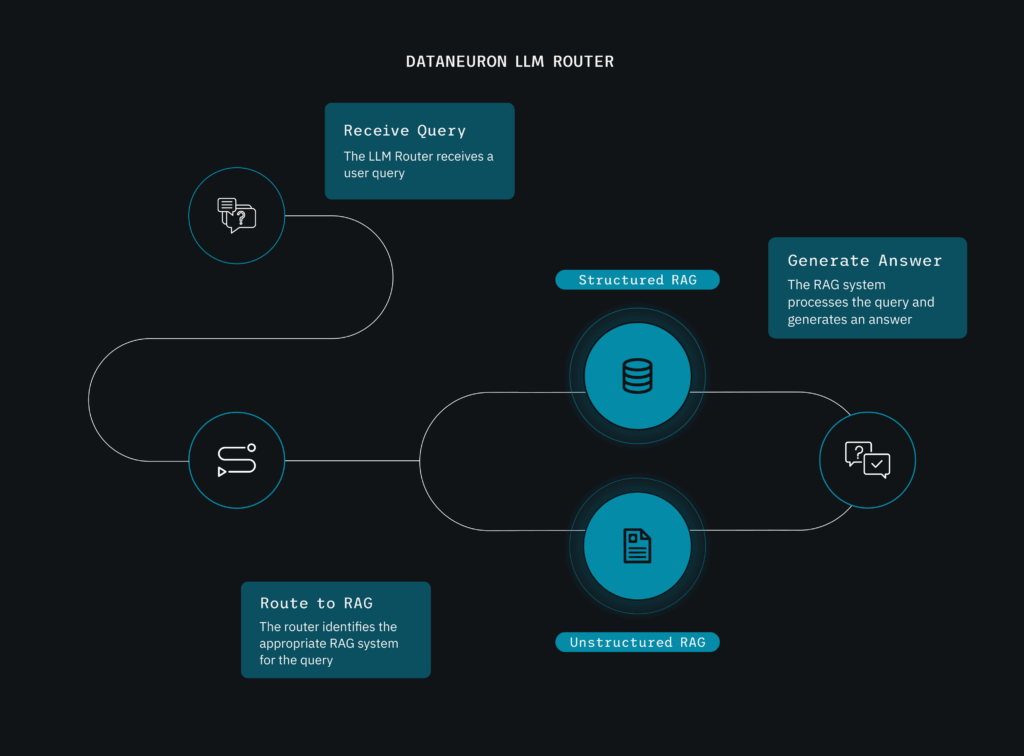
      Step 1: Intelligent Classification with the LLM Router

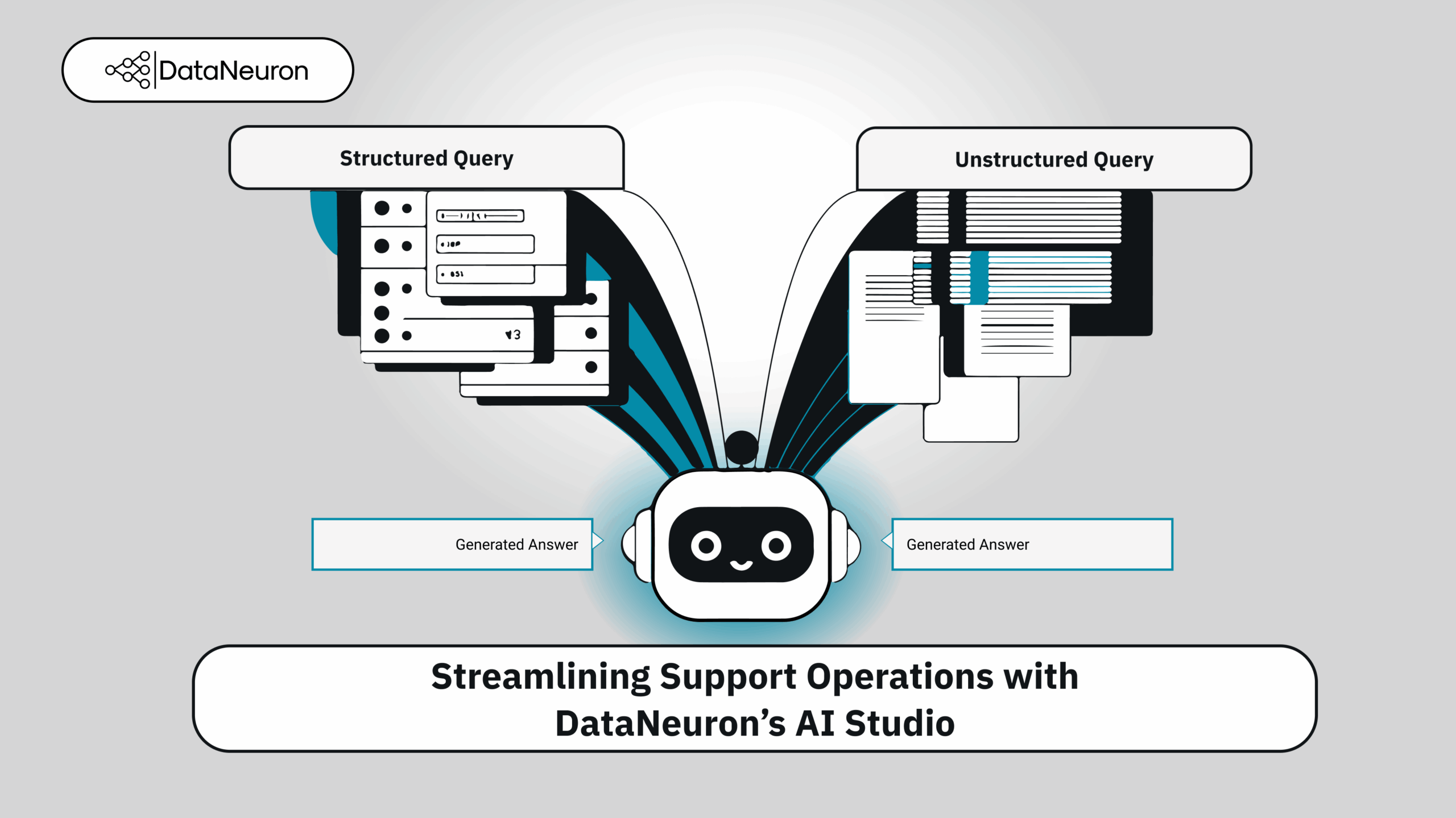
      The first stage was a classifier-based router that automatically determined whether a query required structured or unstructured information. For example:

      • Structured: “What is the price of a king-size bed?”
      • Unstructured: “What is the return policy if the product is damaged?”

      The router leveraged a wide set of example queries and domain-specific patterns to route incoming questions to the right processing pipeline.

      Step 2: Dual-Pipeline Retrieval Augmented Generation (RAG)

      Once classified, queries flowed into one of two specialized pipelines:

      Structured Query Pipeline: Direct Retrieval from Product Databases

      Structured queries were translated into SQL and executed directly on product databases to retrieve precise product details, pricing, availability, etc. This approach ensured fast, accurate answers to data-specific questions.

      Unstructured Query Pipeline: Semantic Search + LLM Answering

      Unstructured queries were handled via semantic vector search powered by DataNeuron’s RAG framework. Here’s how:

      • The question was converted into a vector embedding.
      • This vector was matched with the most relevant documents in the company’s vector database (e.g., policy documents, manuals).
      • The matched content was passed to a custom LLM to generate grounded, context-aware responses.

      Studio Benefits: Customization, Evaluation, and Fallbacks

      The LLMs used in both pipelines were customized via LLM Studio, which offered:

      Fallback mechanisms when classification confidence was low, such as routing queries to a human agent or invoking a hybrid LLM fallback.

      Tagging and annotation tools to refine training data.

      Built-in evaluation metrics to monitor performance.

      DataNeuron’s LLM Router, transformed our support: SQL‑powered answers for product specs and semantic search for policies now resolve 70% of tickets instantly, cutting escalations and driving our CSAT, all deployed in under two weeks.

      – Customer Testimony

      The DataNeuron Edge

      DataNeuron LLM Studio automates model tuning with:

      • Built-in tools specifically for labeling and tagging datasets.
      • LLM evaluations to compare performance before and after tweaking.

      Substantive changes introduced:

      • Specifically stated “service” and “cancellation” to address comments.
      • Highlighted the “Router capability dataset with lots of questions” to highlight the importance of data diversity for the classifier.
      • Detailed the process of the “Structure RAG” pipeline, including natural language to SQL and back to natural language.